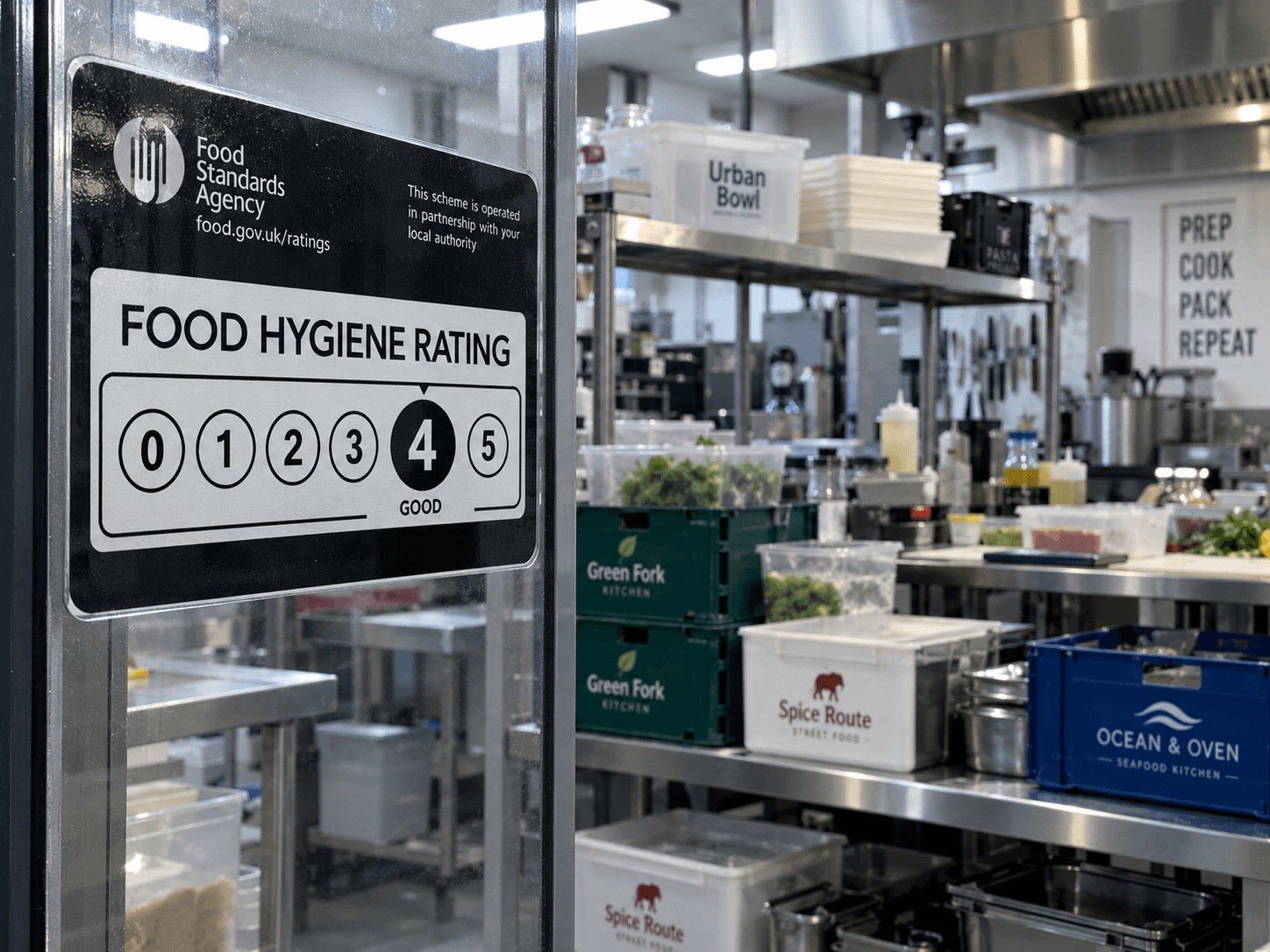

Most food business owners assume their food hygiene rating reflects only their own standards: their training, their cleaning schedule, their process. In a private kitchen, that’s largely true. But in a shared or commissary kitchen, your shared kitchen hygiene rating tells a bigger story, one that includes everyone else cooking under the same roof.
Food hygiene inspections are carried out against the registered premises, not just your brand. So when multiple food businesses share an address, the practices, cleanliness and compliance records of others can directly influence what appears published next to your name online. It’s what customers and delivery platforms see when they search for you. And it may not be a reflection of your own standards at all.
It’s a hidden risk that rarely gets discussed before signing a shared kitchen agreement, yet it can shape your reputation and growth. Understanding how shared kitchen hygiene ratings work is essential before you commit to any space.
How The Food Hygiene Rating Scheme Actually Works
The Food Hygiene Rating Scheme (FHRS), run by the Food Standards Agency, gives food businesses a score from 0 to 5 based on an inspection carried out by the local authority. The rating reflects three things:
- how hygienically food is handled
- the physical condition and cleanliness of the premises
- how well the business manages and records its own food safety procedures
What’s crucial, and often overlooked, is that the inspection is tied to a registered premises, not just a brand. In a single-occupier kitchen, that’s straightforward: one business, one rating, full control over the outcome.
In a shared facility, things get more complicated. When several food businesses are registered or operating under the same roof, the lines blur. The standards and practices of everyone else using that space, even if your own setup is spotless. can influence your hygiene rating.
Why Shared Kitchens Create A Compliance Blind Spot
Shared kitchens allow multiple food brands to use the same space, sometimes on a rota, sometimes side by side. Shared kitchens help keep early‑stage costs down, but they also create a hidden dependency many food entrepreneurs overlook. Your hygiene outcomes depend partly on how well everyone else in that kitchen runs their operation, not just your own.
A shared kitchen is fine until your first big retail order. Then the question becomes: whose hygiene rating is on the door?
Nimesh Sachdev, Founder, Dephna
Here’s what that looks like in practice:
- Shared storage and prep areas If another tenant slips up – a cross-contamination issue, pest problem, or missed cleaning routine – it can affect what an inspector finds during your assessment, even if your own area is spotless.
- Platform visibility Delivery apps display hygiene ratings against a kitchen’s registered address. If multiple virtual brands operate from the same site and that site’s rating drops, every brand trading from that address can take a reputational hit, regardless of who caused the issue.
- Mixed standards One business running tight food safety procedures next to another cutting corners creates risk for everyone sharing the site. Inspectors assess shared areas as a whole, not by individual responsibility.
- Limited control over records Traceability and cleaning logs are harder to keep watertight when equipment, schedules and processes are shared.
None of this means shared kitchens are a bad option, plenty of food entrepreneurs use them successfully to grow their brands. It simply means going in with eyes open about where the risk sits. And that means understanding that your shared kitchen hygiene rating can be influenced by factors beyond your control.
Questions Worth Asking Before You Sign
If you’re weighing up shared kitchen space, these are worth getting straight answers to before you commit:
- How is the premises registered, and does everyone operating there share the same registration and the same published rating?
- Check the facility’s own compliance track record. A site with a strong hygiene history and a proper HACCP‑based system in place carries materially less risk than one that’s never been properly audited.
- How are storage, prep, and cleaning responsibilities genuinely separated between tenants, not just described as separate on paper?
- Who’s accountable if an inspection flags an issue that wasn’t caused by your business specifically?
- Does the operator hold or actively work towards SALSA accreditation or an equivalent recognised standard? Want to know more? Our guide to SALSA accreditation requirements and costs covers what that standard actually demands of a site, and a facility already meeting it is a strong signal the operator takes shared compliance seriously.
When Shared Space Stops Being Worth The Risk
Shared kitchens make sense while you’re testing a product and keeping costs low. The calculation changes once a retail buyer, delivery platform, or wholesale client starts asking questions about your hygiene rating directly. The same is true once your volumes justify dedicated space . Our honest look at private kitchens versus shared kitchens breaks down exactly where that tipping point tends to land, and what you gain by moving to a dedicated site once it does.
A dedicated commercial kitchen for rent removes the shared-premises risk entirely. Your hygiene rating reflects your practices alone, your traceability records are genuinely yours. Nothing another tenant does can affect what an inspector finds.
For delivery-first brands specifically, this matters even more, since platform-displayed ratings sit directly next to your listing. A dedicated dark kitchen means that rating is entirely a reflection of your own operation, not whoever else happens to be sharing your address.
What A Compliant Site Should Already Have In Place
Whether you’re staying in shared space for now or moving to something dedicated, the same fundamentals apply. A properly run facility should have:
- Documented HACCP-based food safety management covering every tenant or operator using the site
- Clear, enforced separation between raw and ready-to-eat storage and prep areas
- Pest control and cleaning schedules are evidenced, not just described
- A transparent compliance history you can actually check, not just take on trust
These fundamentals matter for any first production kitchen, shared or not. The premises have to support a genuine food safety system, not simply host whoever happens to be renting it that week.

Shared Kitchen Hygiene Ratings FAQs
Does a shared kitchen always mean a shared hygiene rating?
Not always, but it’s a real risk worth checking directly with any facility you’re considering. When several businesses share registration, storage, or prep areas at one address, the practices of every tenant using the site can influence inspection outcomes and the hygiene ratings displayed on delivery platforms, not just your own.
Can I request my own separate hygiene inspection in a shared kitchen?
This depends on how the site and your business are registered with the local authority. It’s worth raising directly with both the facility operator and your local authority before signing, since registration structures vary between shared kitchen providers.
How do I check a kitchen’s hygiene rating before committing to it?
Food hygiene ratings for any registered premises in England, Wales, or Northern Ireland are publicly searchable on the Food Standards Agency’s ratings website. It’s worth checking a shared kitchen’s rating and history before signing, not just taking the operator’s word for it.
What’s the difference between a shared kitchen and a commissary kitchen?
The terms are often used interchangeably. Both describe a facility where multiple food businesses operate from the same site, typically sharing equipment, cold storage facilities, or scheduled time slots, as distinct from a dedicated kitchen used by a single business.
Is SALSA accreditation relevant if I’m only using a shared kitchen?
It’s still worth checking whether the facility operator holds or is working towards SALSA or an equivalent standard. A properly accredited site signals that compliance is actively managed across every tenant, not left to chance.
When should a growing food business move out of shared kitchen space? Generally once retail, wholesale, or delivery platform requirements start depending directly on your hygiene rating and compliance history. It may also kick in once shared storage and scheduling genuinely limit your output. Moving before you’re forced into it by a lost order or platform issue tends to be the lower-risk path.
Do delivery platforms like Deliveroo or Uber Eats show the kitchen’s rating or the brand’s rating?
Platforms typically display the hygiene rating associated with the registered kitchen address a brand operates from. In a shared facility, that means the rating shown next to your listing reflects the site as a whole, not solely your own business.
Weighing up shared kitchen space against something dedicated? Get in touch with Dephna to talk through commercial kitchen space in North West London locations, where your hygiene rating is entirely your own.
Author Information
This article was co-written by…
Raj, Managing Director
Raj is a Managing Director, bringing years of expertise in the food and commercial kitchen rental industry. With a focus on innovation and a deep understanding of business operations, Raj is committed to providing tailored solutions that help food entrepreneurs and start-ups succeed. Outside of work, Raj stays inspired by keeping up with the latest food industry developments.


