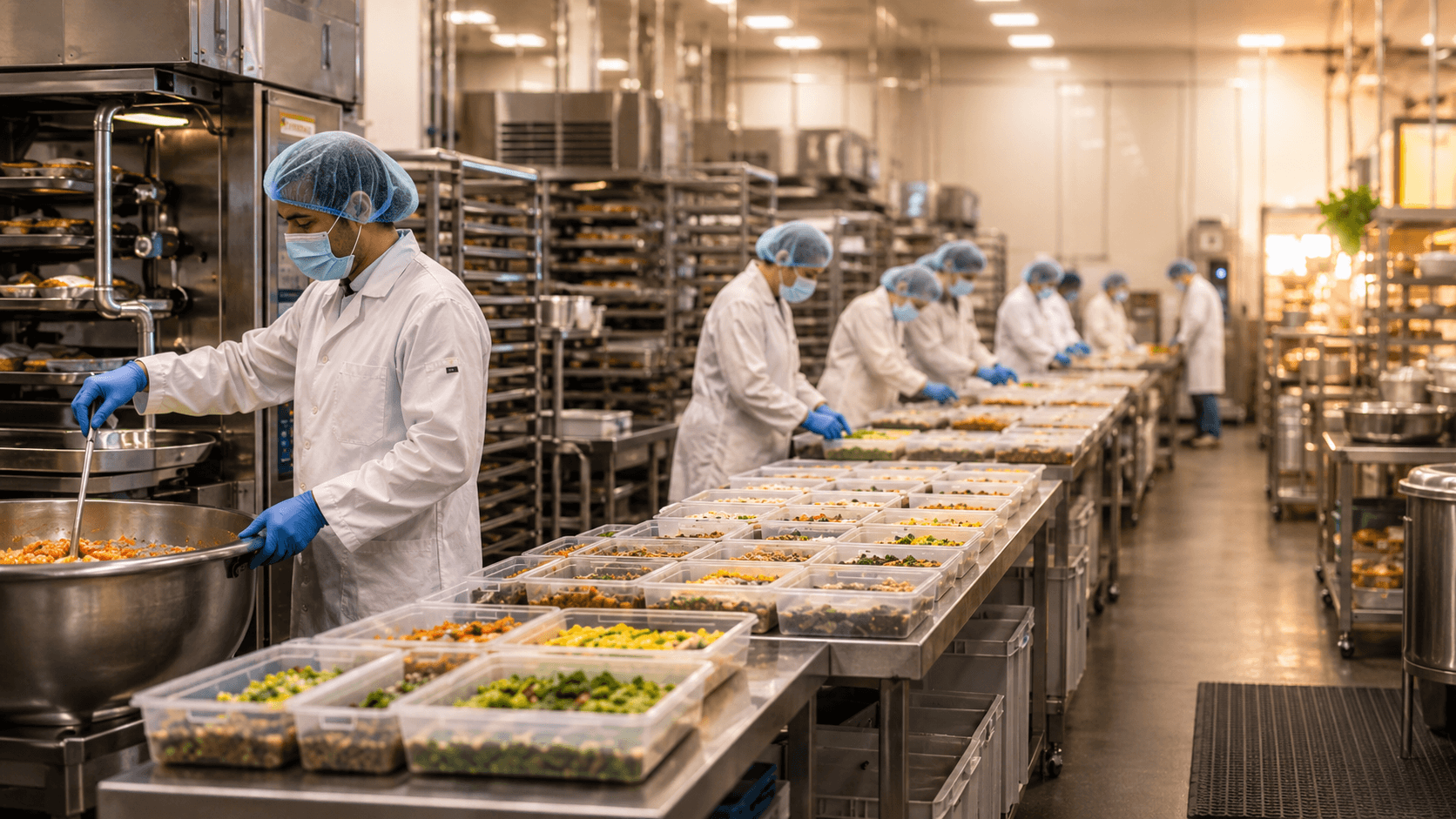
Many food businesses are turning their attention to the North West London commercial kitchen landscape, and for good reason. For food brands, caterers and producers looking to scale, location is not just a pin on a map. It is the foundation of your entire operation. It’s not just about finding four walls and a roof, it’s about finding a place that actually works with your business, not against it. The wrong location can hold you back before you’ve even begun.
That’s why so many operators are choosing North West London. It may not be the flashiest of postcodes, but for serious food operations, but North West London is quietly becoming one of the smartest bases for commercial kitchens and central production units in the UK. Here’s what makes it work.
North West London is a Logistics Sweet Spot
North West London sits right where London’s main transport arteries meet. With the M1 motorway, the A5 and the A406 North Circular all within easy reach, you can hit central London in under half an hour while still having clear runs to Birmingham, Manchester, Leeds, anywhere your customers might be.
If you’ve ever tried to get a food delivery truck through central London at 9am, you’ll appreciate what this means. The M1 is the UK’s food superhighway. It’s how ingredients come down from the north and how finished products get distributed across the country. Being positioned right off this corridor means your drivers aren’t spending half their day navigating inner-city congestion.
Take Park Royal, for example. One of the UK’s largest industrial estates. located in this corridor, produces and processes over 30% of all of the food consumed in London. Major manufacturers like Greencore operate from this area, producing over 619 million sandwiches a year and making more than 10,000 direct-to-store deliveries daily. That level of food production infrastructure does not happen by accident. It happens because of the area’s exceptional logistics positioning.
How HS2 Will Transform Food Logistics
Here’s another thing that’s flying under the radar for a lot of food businesses. The arrival of HS2 is set to transform how products move around this part of London. Old Oak Common station, located in the heart of this industrial corridor, is set to become one of Britain’s best-connected transport hubs when it opens.
The government has committed over £25 billion for the 2026 to 2030 phase of construction, with tunnel boring machines already assembled and preparations underway for the spring 2026 launch towards Euston. The 4.5-mile twin-bore tunnel between Old Oak Common and Euston is due to be completed by late 2027.
What does this mean for your food businesses? Existing rail lines, currently some of the most congested rail corridors in Europe, are going to free up massively. Research from Logistics UK estimates we could see 144 additional freight trains per day on the released capacity. That’s a game-changer, fundamentally changing the economics of rail-based food distribution.
Local economic projections estimate HS2 will pump £10 billion into the West London economy over the next decade and support 22,000 new homes in the area. For food producers operating nearby, you’re looking at improved infrastructure, better transport links and a growing pool of skilled workers right on your doorstep.

Access to London’s Food Economy
One of the best things North West London offers is a genuine proximity to the capital’s massive food scene without paying Zone 1 prices or dealing with Zone 1 complications.
Central London remains the UK’s largest concentration of restaurants, hotels, and food retailers. From North West London, your products can reach Mayfair, the City or Canary Wharf within 45 minutes, fast enough for same-day deliveries without the premium rents or dealing with the parking nightmares of a central location.
This positioning is gold for caterers serving corporate clients, food brands supplying high-end retailers or anyone managing just-in-time deliveries to restaurant groups. You get access to Central London with industrial practicality.
And if you’re a food business dealing with international supply chains or you’re toying with export ambitions, the area also sits within easy reach of Heathrow Airport. Raw ingredients can be in your production facility within hours of landing, while finished products can reach continental markets with minimal friction.
North West London’s Infrastructure Advantage
Unlike trendy food halls or converted railway arches, North West London offers genuine industrial infrastructure designed for serious food production. Park Royal alone houses 1,700 businesses and 40,000 jobs, with a serious concentration of food and beverage manufacturers.
This critical mass creates its own advantages: specialist suppliers, packaging companies, cold chain providers, and food industry services end up clustered in the area because their customers are already here. For a food brand setting up a new central production unit, this means shorter lead times for equipment, easier access to specialist services and a ready-made network of industry contacts. And because these facilities were designed for production from day one, you get purpose-designed loading bays, adequate power supplies, and proper drainage that actually works. Not afterthoughts bolted into a space that was never meant for food production.
The Last-mile Delivery Economics
Last-mile delivery now accounts for a significant portion of total shipping costs, and that percentage is climbing. For food businesses, this makes production location a financial decision as much as a practical one.
Operating from North West London reduces the distance, and cost, of reaching London’s dense consumer base. Whether you are supplying a dark kitchen in Shoreditch, restaurant groups across the West End, or retailers throughout the M25 corridor, you are starting from the centre not fighting your way in from the periphery.
The maths speaks for itself: shorter delivery distances mean lower fuel costs, faster turnaround times and the ability to handle more drops per vehicle per day. For food businesses working on tight margins, these efficiencies add up fast.
Cost Efficiency Without Compromise
London commercial property does not come cheap, we all know that. But North West London offers considerably better value than locations closer to the centre. Industrial rents in locations like Park Royal, Wembley and Staples Corner typically run 30 to 40% lower than equivalent spaces in South or East London, while giving you better transport connections.
When you’re managing tight food business margins, this cost difference can be the difference between profitable growth or stretching yourself too thin. A CPU that costs less to operate leaves more capital for things that really matter: better equipment, quality ingredients, and the team that makes your products exceptional.
Flexible rental arrangements, like those offered by Dephna, give food brands the freedom to scale their space as demand grows. Our North West London commercial kitchen sites, such as Portal Way or Chase Road, are designed for exactly that. Start with the space you need today, and expand as your retailer list grows. This flexibility is crucial in an industry where seasonal demand, new contracts, and product launches can completely change your space requirements overnight.
Future-proofing Your Commercial Kitchen Operation
The next decade is going to bring significant changes to London’s food logistics landscape. Congestion zones are expanding, electric vehicle requirements are tightening and rail freight is becoming more viable as road costs increase.
North West London is positioned to benefit from all of these shifts. HS2’s Old Oak Common development will bring up to 25,500 new homes in the long term, including 9,000 in the first phase. That’s both a workforce and a consumer base on your doorstep. The area’s existing road infrastructure, combined with improving rail links, offers operational flexibility as transport economics evolve.
For food businesses making location decisions today, this future-proofing matters. WIth CPU leases typically running from 3 to 10 years, choosing a location that works now and in 2035 isn’t just smart, it’s essential.
Why Dephna’s North West London Locations Work
Our North West London commercial kitchen and cold storage facilities are positioned specifically to give food businesses these logistical advantages. Our sites offer:
- Direct access to major road networks, reaching the M1, A5, and North Circular without navigating residential streets
- Proximity to HS2 development, positioned to benefit from improved infrastructure as the project progresses
- Flexible space options, from smaller production kitchens to larger CPU facilities, scaling with your business
- Integrated cold storage, essential for food manufacturers managing temperature-sensitive products
- Compliant, production-ready facilities, designed for food manufacturing, not converted from other uses
For food brands supplying retailers, caterers managing high-volume contracts, or producers preparing for their next growth phase, location strategy matters as much as recipe development. North West London offers that rare combination of metropolitan access, proper industrial infrastructure, and future-proof transport links that serious food businesses actually need.
Ready to explore your options?
If you are considering how our North West London commercial kitchen and CPU facilities could work for your operation, we’d love to show you around. Our team can walk you through available spaces, discuss your production needs, and help you figure out if this location fits your logistics strategy.
Get in touch to arrange a viewing or discuss your requirements.
Author Information
This article was co-written by…
Nimesh, Managing Director
Our Managing Director, Nimesh, is a seasoned expert in entrepreneurship, business strategy and real estate development, with a strong focus on the food and commercial kitchen rental industry. He’s passionate about empowering businesses and start-ups by creating flexible, high-quality spaces that help them thrive. When he’s not driving the business forward, Nimesh is busy exploring the newest food spots to stay ahead of the game.