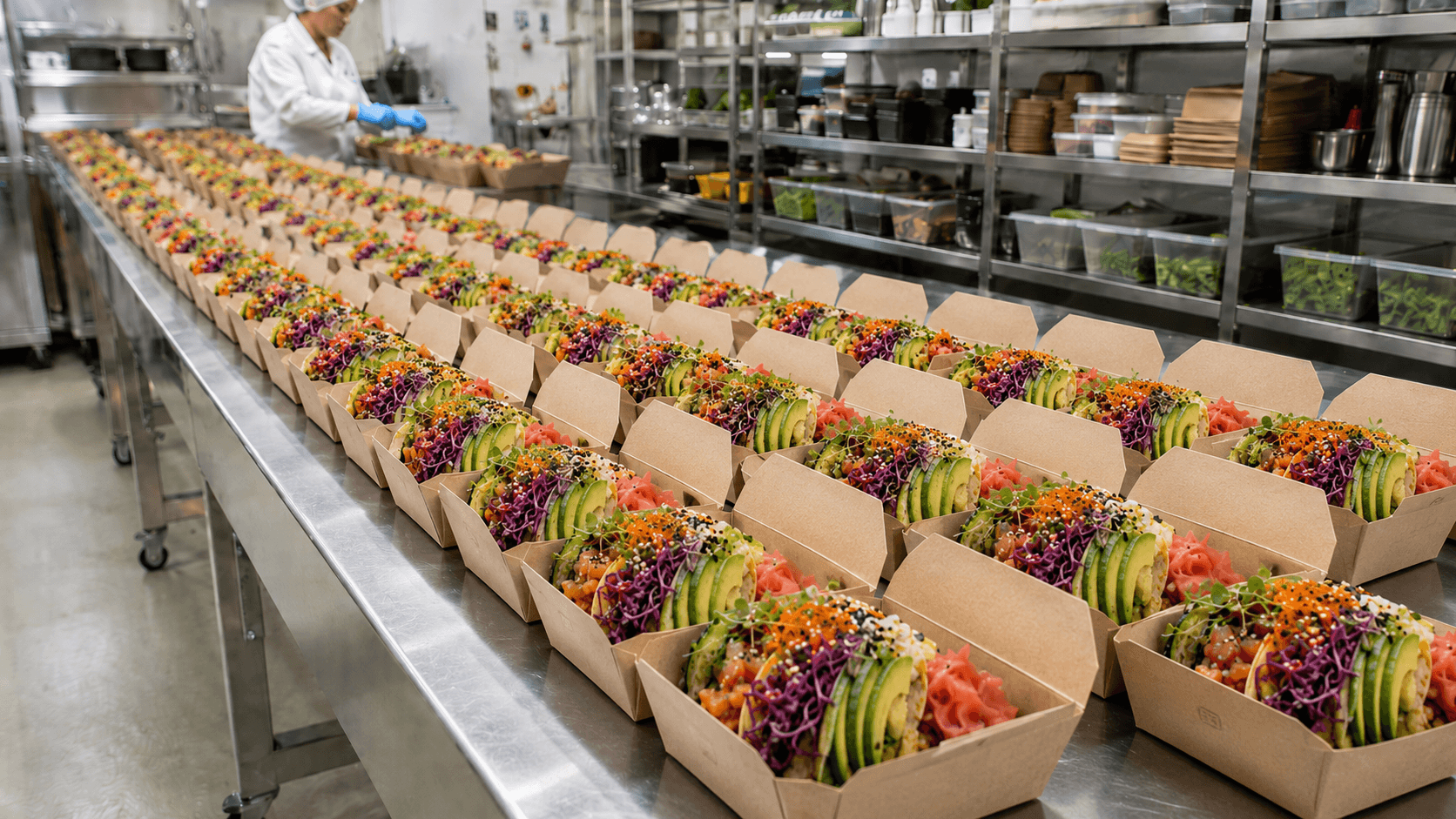
Every food business knows the feeling. Peak season’s looming – Christmas, a major retail push, or that viral moment you didn’t see coming. Suddenly your production space simply just can’t keep up. You’re staring at the calendar, doing the maths, and realising that whatever you do next needs to happen fast, because “eventually” won’t cut it when demand lands in six weeks.
This is the crunch point where speed matters more than scale. Not the five‑year capacity plan, but the “we need this running now, and we can’t afford to lock ourselves in long‑term” kind of move. It’s the difference between scrambling and staying ready.
In this piece, we unpack how smart food businesses are standing up extra production capacity in a matter of weeks, and why that agility is becoming the new competitive edge.
Peak Season Doesn’t Wait for Planning Permission
Here’s the uncomfortable truth about traditional capacity expansion: it moves at exactly the wrong speed for peak season.
Planning permissions, lease negotiations, fit-outs – they’re all built for the long game. But when your shelves are empty and orders are stacking up, the “long game” feels like a luxury.
That’s why more food businesses are shifting from build and own to borrow and flex. Temporary production spaces, modular kitchens, and short‑term leases are rewriting what agility looks like. It’s not about cutting corners: it’s about cutting lead time.
The smartest operators aren’t waiting for the perfect facility; they’re finding compliant, ready‑to‑run commercial kitchen spaces and getting product out the door while competitors are still waiting on planning approval.
Why “Just Work Overtime” Isn’t a Real Strategy
It’s tempting to think you can muscle through peak periods by pushing your existing kitchen harder. More shifts, longer hours, squeezing every last bit out of the equipment you’ve got.
And for a while, it works. Until it doesn’t. Every kitchen has a physical ceiling, and once you hit it, the cracks start to show. Exhausted staff, breakdowns at the worst possible moment, and quality slipping right when your brand is under the most scrutiny.
Extra hours help at the margins, but they don’t fix a genuine capacity shortfall. If your peak‑season volume truly exceeds what your current kitchen was built to handle, the answer isn’t more hours. It’s more space. In our experience, the businesses that stay ahead recognise this early and act before the pressure hits boiling point.
How to Stand Up Production Capacity Without Overcommitting
Here’s where short-term leases on flexible kitchen space earn their keep. It’s worth being honest about why it fits peak demand so well.
You don’t need extra production capacity all year round. You need it for six weeks around Christmas, or the eight weeks after a retail listing goes live, or however long your particular peak actually runs. Signing a long lease or committing to a permanent facility for a temporary need is a mismatch that costs you either way. Either you’re underprepared during the peak, or paying for empty space the rest of the year.
A short-term lease sidesteps that entirely. You take on extra production and cold storage capacity for as long as you need it, then hand it back once the rush is over. It’s a different way of thinking about capacity. Less “sign a long commitment and hope it fits” and more “take the space just for the weeks it matters.”
For many businesses, that’s the real unlock. It’s not about finding a new building at all. It’s about being able to move in and out of production space on a timescale that matches how demand behaves. And not being stuck with a lease built for someone else’s business model.
What Actually Has to Be in Place
Standing up extra production capacity quickly isn’t just a case of finding an empty room and calling it done. A few things genuinely matter if you want this to work, not just look good on paper.
Cold storage capacity has to match your peak volume, not your average volume. It’s the single most common underestimation businesses make when gearing up for busy periods. Compliance and food safety groundwork also need to be sorted well before the rush. There’s no time during a six-week scramble to fix gaps in HACCP documentation or wait on an environmental health sign-off. )Our HACCP kitchen requirements and compliance checklist is worth a look if you want to spot those gaps before peak season, not during it.)
And finally, the space itself needs a layout that supports the kind of production you’re doing, not something repurposed at the last minute and hope for the best.
Get those three things right, and standing up meaningful extra capacity in a matter of weeks stops being a stretch. It becomes a well‑executed logistics exercise: fast, compliant, and ready when demand hits.
Who Actually Needs This
It’s easy to assume this is only relevant to businesses with obvious, dramatic seasonal spikes. Think Christmas hampers or Easter chocolate. But peak demand shows up in far less predictable forms too.
Delivery brands feel it around major sporting events or bad weather weekends. Cloud kitchens hit it when a new virtual brand launches and takes off faster than expected. Caterers see it when wedding season collides with a packed corporate events calendar. And retail-focused manufacturers? Their peak arrives the moment a new supermarket listing goes live, turning a modest production run into serious volume overnight.
If your business has ever hit a point where demand outran capacity, even briefly, you’ve already experienced the exact problem that knowing how to stand up production capacity quickly is meant to solve.
The Cost of Not Being Ready
It’s worth being blunt about what happens when peak capacity isn’t sorted in time, because the consequences are usually more expensive than the fix.
Missed retail deadlines can mean losing a listing altogether, sometimes for good. Quality slips under pressure tend to show up later in reviews and repeat‑purchase rates. And then there’s the hidden cost – the opportunity itself. A viral moment or seasonal spike is, by definition, temporary. If you can’t meet it while it’s happening, it doesn’t wait around for you to catch up.
Set that against the relatively modest cost of standing up temporary flexible capacity, and the maths speaks for itself. Being prepared always costs less than being reactive. It’s worth checking what cost-effective commercial kitchens to rent actually cost before assuming peak-ready capacity is out of reach for your budget. For most businesses, it’s a smaller line item than the risk it’s protecting against.
Building This Into Your Planning Calendar
The businesses that handle peak season smoothly, year after year, tend to share one habit. They don’t treat capacity planning as a scramble that starts once the peak is already visible on the horizon. By building in a genuine lead time , they can identify where extra capacity is probably needed and get the conversation started early.
That doesn’t mean overplanning or locking in space you might not use. It means knowing, roughly, what your peak periods look like each year and having a relationship with a flexible CPU provider in place before you need to move fast. Taking a look at our locations across London is a sensible place to start that conversation, so you already know what’s available before peak season forces the decision.

Final Thought
Peak season shouldn’t force a choice between turning away business or running your existing kitchen into the ground. The whole reason fast, flexible capacity exists is because demand rarely moves at the pace traditional facility planning expects.
When you get the timing right, standing up extra production space in weeks rather than months stops being a heroic effort. It becomes a practical bit of logistics that pays for itself the moment peak season hits.
If you’re looking ahead at a busy period and wondering whether your current kitchen can actually handle it, now is the sensible moment to explore your options. Don’t wait until it becomes urgent.
Dephna provides flexible commercial kitchens and storage space across London. All designed to help growing food businesses scale quickly when it matters. If you’d like to talk through what peak‑ready capacity could look like for your operation, we’re always happy to have that conversation. Get in touch today.
FAQs
What does it mean to be “peak-ready” as a food business? Being peak-ready means having enough production and cold storage capacity in place to meet demand during your busiest periods, without relying on overworking existing space or staff.
How quickly can extra production capacity actually be arranged? With a flexible CPU model, businesses can often stand up meaningful additional capacity within weeks. The core infrastructure – cold storage, compliance, and production layout – is typically already in place.
Why not just extend hours at my existing kitchen during peak season? Extending hours helps at the margins, but there’s a physical ceiling on what a single kitchen can produce. A genuine capacity shortfall needs more space, not just more hours in the same space.
What’s the advantage of temporary flexible capacity over a permanent facility? It matches the cost to the need. Peak demand is usually temporary, so paying for temporary capacity avoids being underprepared during the peak or stuck with unused space the rest of the year.
What should I check before committing to extra capacity for peak season? Confirm the cold storage capacity actually matches your peak volume, not your average volume, and make sure compliance groundwork is already sorted so there’s no last-minute scramble.
What happens if a business isn’t ready for a demand spike? Consequences can include missed retail deadlines, quality issues under pressure, and losing a time-limited opportunity that doesn’t wait around for capacity to catch up.
How far in advance should I start planning for peak capacity? Ideally, weeks ahead of your known busy periods, with an existing relationship in place with a flexible CPU provider so you’re not starting the search from scratch under pressure.
Author Information
This article was co-written by…
Brindha, Sales Director
Our Sales Director, Brindha, knows her stuff when it comes to finding the perfect commercial kitchen or cold storage solution. With years of experience and a hands-on approach, she’s all about making life easier for food entrepreneurs so they can focus on what they do best – creating amazing dishes. When she’s not helping businesses thrive, Brindha’s out and about exploring the hottest food trends around London.