
Launching your first compliant production kitchen is one of those make or break moments for a food business. It’s where some founders quietly build the foundation for growth while others unknowingly set themselves up for problems six months down the line.
Get it right, and compliance becomes second nature. It’s simply how the kitchen runs day-to-day. Get it wrong, and you’re suddenly retrofitting drainage, rewriting your HACCP plan, and explaining a failed audit to a buyer who was ready to place an order.
The good news? Launching compliant doesn’t mean launching big, expensive, or locking into a long lease. It’s about making a handful of smart decisions in the right order. At Dephna, it’s the exact blueprint we walk new producers through before they take on their first kitchen space.
What “Compliant” Actually Means at Launch Stage
Compliance isn’t a single certificate you tick off. It’s a system built from three parts that have to work together from day one:
- Premises: a kitchen that physically meets food hygiene standards: hygienic surfaces, adequate drainage, ventilation, and separation between raw and ready-to-eat processes.
- Process: a documented, HACCP-based food safety management system that reflects what you actually do, not a generic template.
- Paperwork: registration with your local authority, staff training records, cleaning schedules, and supplier checks that an inspector or auditor can review on demand.
Miss one and the others don’t count for much. A spotless kitchen with no HACCP documentation will still fail an inspection. A perfect HACCP plan running in a kitchen without proper drainage fails too.
Step 1: Register With Your Local Authority Before You Produce Anything
Every food business operating from commercial premises in England, Wales, or Northern Ireland must register with their local authority at least 28 days before starting to trade. It’s free, and it’s a legal requirement, not optional paperwork.
The Food Standards Agency’s business registration guidance covers exactly who needs to register and how. Skipping or delaying this step is one of the most common, and most easily avoided, mistakes first-time producers make.
Step 2: Choose Premises That Are Compliant Before You Move In, Not After
This is the single most high-leverage decision in the entire blueprint. We’ve seen producers that underestimated ventilation, it’s almost always the first thing they end up retrofitting. And that doesn’t come cheap.
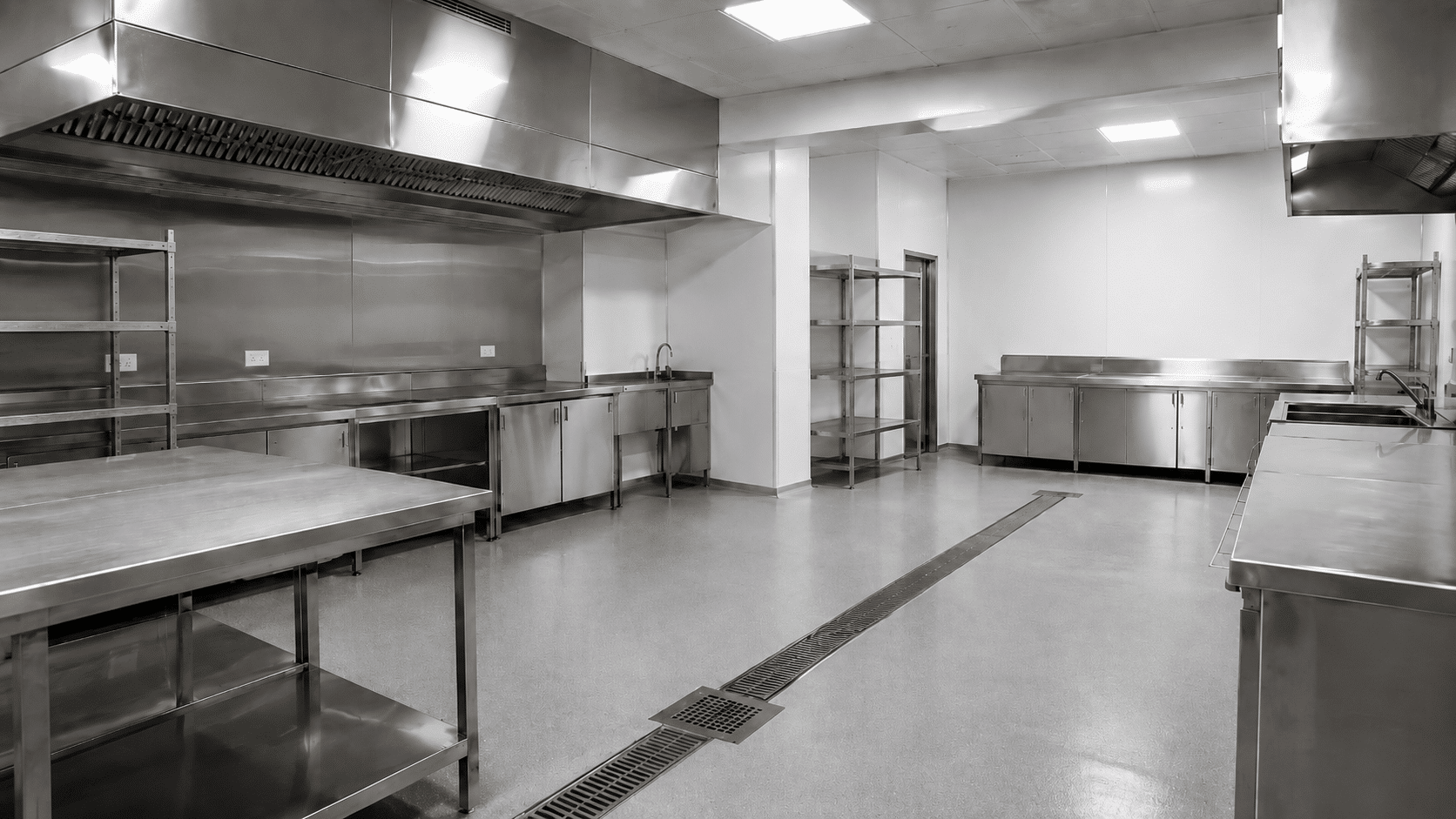
The fix? Start with a kitchen that’s already built to commercial hygiene standards. It saves weeks of remedial work and removes most of the risk from your first inspection or audit. Look for:
- Hygienic, easy-to-clean flooring and wall surfaces
- Proper drainage and ventilation appropriate to your process
- Separate zones for raw prep, cooking, cooling, and packing
- Adequate hand-wash stations, separate from food prep sinks
- Pest-proofing already built into the structure, not bolted on afterwards
If you’re producing for meal prep, wholesale, or retail, our guide to meal prep kitchen requirements breaks down layout and process considerations in more depth. Our Central Production Unit spaces are designed around exactly this kind of process separation from the outset, so you can focus on production, not plumbing.

Step 3: Build a HACCP Plan That Reflects Your Actual Process
A generic downloaded HACCP template is a starting point, not a finished plan. Your hazard analysis needs to reflect your specific ingredients, equipment, and process. The critical control points for a cold-filled sauce look nothing like those for a baked product or a chilled ready meal.
This is also where a lot of founders under-budget their time: building a proper HACCP plan from scratch typically takes longer than sourcing the kitchen space itself.
Step 4: Get Cold Storage and Traceability Right From Day One
Weak traceability is one of the most common gaps auditors find, and it’s also one of the easiest to prevent if you set it up correctly from the start rather than retrofitting it later. That means:
- Batch-coding and dating everything that goes into cold storage
- Keeping supplier delivery records that let you trace an ingredient back to its source
- Proper walk-in and dedicated cold storage sized for actual stock holding, not just daily prep.
Step 5: Train Your Team to the Standard Your Paperwork Claims
An inspector or auditor doesn’t just check documents, they’ll often ask staff directly about hygiene practices, allergen handling, or what to do if something goes wrong.
Training records need to match what your team can actually demonstrate on the day. Build this in early, especially if you’re bringing on temporary or part-time staff for busier production runs.
Step 6: Plan Your Accreditation Roadmap, Even If You’re Not Ready Yet
You don’t need full SALSA accreditation to launch, but if retail or wholesale supply is on your roadmap, it’s worth building your systems with that standard in mind from day one rather than reworking everything later.
Our detailed breakdown of SALSA accreditation requirements and costs covers exactly what buyers will expect to see and what the process costs in 2026. Worth reading before you finalise your HACCP documentation, since designing to that standard from the outset saves a rebuild later.
Step 7: Test Before You Commit To Permanent Space
The lowest-risk way to launch is to prove your process works at a manageable scale before signing up for anything long-term. Flexible, short-term commercial kitchens for rent let you validate your product, your systems, and your first few orders without locking into space sized for volumes you haven’t proven yet.
If retail or wholesale supply is the eventual goal, our guide on moving from market stall to retail shelf covers how to scale that space up in stages as your order book grows.
The Mistakes That Cause The Most Delays
- Signing a long lease before validating the product. Committing to fixed space before you know your real volumes is the single most expensive early mistake.
- Treating HACCP as a formality. A generic plan that doesn’t reflect your actual process will unravel under any real audit or inspection.
- Underestimating premises requirements. Converted domestic kitchens and improvised spaces are the most common reason first inspections fail.
- Leaving accreditation planning too late. Designing your systems to SALSA standard from the outset is far easier than retrofitting them once a retail buyer asks for proof.
Ready to launch from a kitchen that’s already compliant? Get in touch with Dephna to find flexible commercial kitchen space built to hygiene standards from day one – no long lease, no retrofitting required. We’ll help you create a plan to match your budget.
FAQs
Do I need SALSA accreditation to launch my first production kitchen?
No. SALSA isn’t a legal requirement, and most first-time producers launch without it. It becomes relevant once you’re approaching retail or wholesale buyers, who often expect to see it. Building your systems with the standard in mind from day one makes it far easier to achieve later.
What’s the minimum legal requirement before I start producing food?
You must register your food business with your local authority at least 28 days before you start trading. This applies regardless of the size of your operation or whether you’re producing from a shared, rented, or dedicated kitchen.
Can I launch from a shared or rented commercial kitchen and still be compliant?
Yes, as long as the premises itself meets hygiene standards – proper drainage, ventilation, surfaces, and process separation. Compliance is about the space and your systems together, not exclusive ownership of the kitchen.
How long does it take to get a first production kitchen fully compliant?
It varies, but producers starting from a kitchen already built to commercial hygiene standards are typically ready to trade within a few weeks, since the premises-related risk is already handled. Building a HACCP plan and training records from scratch is usually the longer part of the timeline.
What’s the biggest mistake first-time producers make when launching?
Committing to long-term, oversized space before validating their product and volumes. A flexible, short-term kitchen lets you prove your process first and scale into bigger or more specialised space once you know what you actually need.
Do I need a HACCP plan even if I’m a very small producer?
Yes. HACCP-based food safety management is a legal requirement for all food businesses in the UK, regardless of size. The scale and complexity of your plan should reflect your process, but the requirement itself doesn’t disappear at small volumes.
How is a Central Production Unit different from a standard first kitchen?
A Central Production Unit is purpose-built for higher-volume batch production, with dedicated zones for each stage of the process. Most first-time producers don’t need one on day one, but it’s worth understanding the difference if wholesale or multi-site supply is part of your longer-term plan.
Is it cheaper to launch from a converted space than a purpose-built commercial kitchen?
Often the opposite, once you account for the cost of retrofitting drainage, ventilation, and hygienic surfaces to pass inspection. A kitchen already built to commercial standards frequently works out more cost-effective once remedial work is factored in.
Author Information
This article was co-written by…
Brindha, Sales Director
Our Sales Director, Brindha, knows her stuff when it comes to finding the perfect commercial kitchen or cold storage solution. With years of experience and a hands-on approach, she’s all about making life easier for food entrepreneurs so they can focus on what they do best – creating amazing dishes. When she’s not helping businesses thrive, Brindha’s out and about exploring the hottest food trends around London.


