There’s a moment that happens to almost every growing restaurant group. Somewhere around site four or five, the cracks start to show. Head chefs are quietly doing things their own way. Food costs are creeping up site by site, and nobody can quite explain why. Quality is… fine, mostly, but “fine” varies depending on which branch you visit on a Tuesday.
If any of that sounds familiar, you’ve probably already had the conversation internally: does our restaurant group need a central production unit?
Spoiler – if you’re operating five or more sites, the answer is almost certainly yes. Let’s get into why.
What a Central Production Unit Actually Does
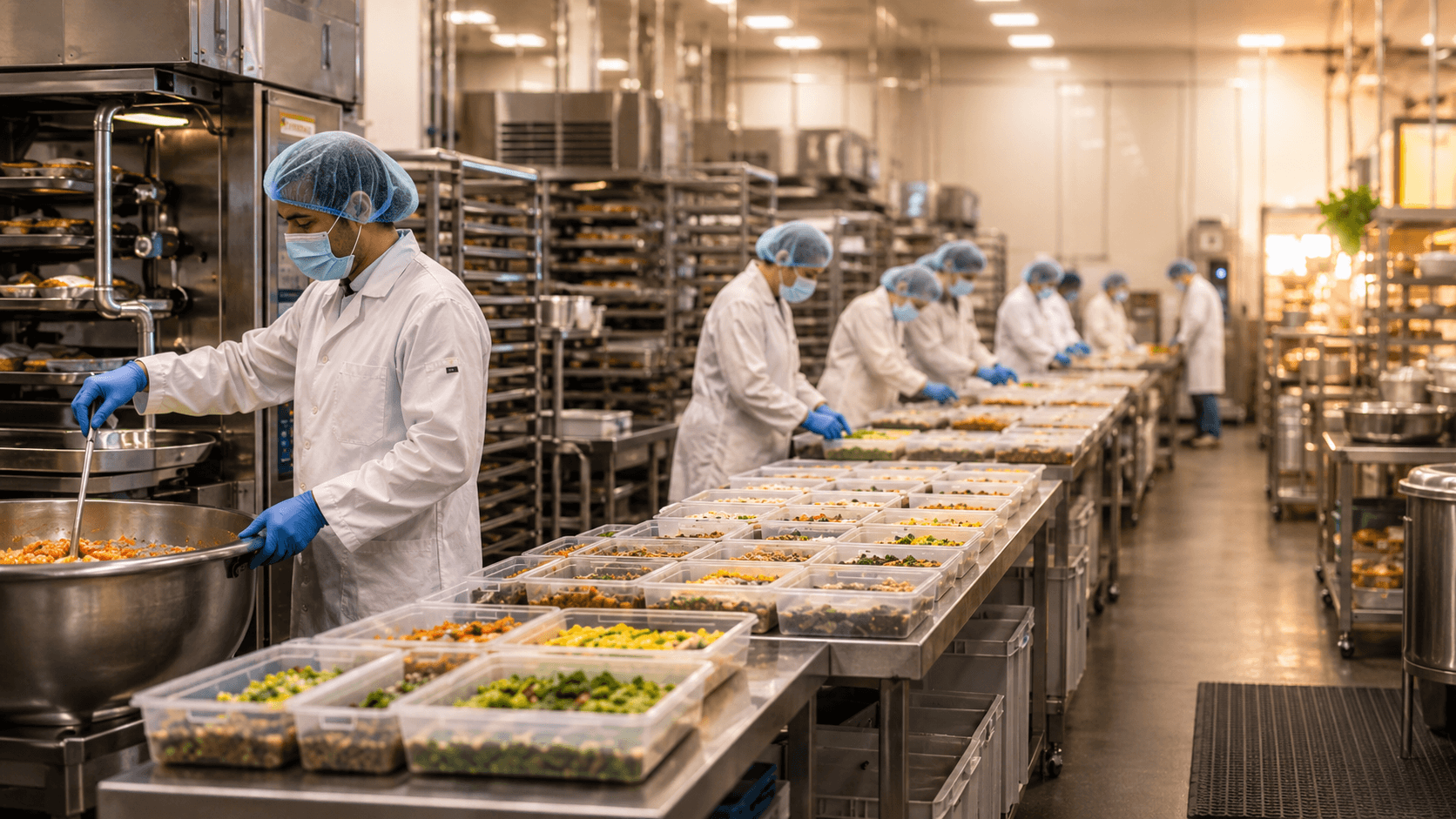
A central production unit, or CPU, is essentially a single dedicated site where core food production happens before it’s distributed out to your restaurants. Think sauces, marinades, prepped proteins, doughs, batch-cooked components, even fully plated items, depending on your model. Instead of every site making its own béchamel from scratch every single morning, one kitchen does it once, consistently, at scale.
It sounds simple because, in principle, it is. The complexity comes in the logistics, and that’s exactly the part most growing groups underestimate until they’re five sites deep and drowning in inconsistency.
The Consistency Problem Nobody Talks About Enough
Here’s an uncomfortable truth: as restaurant groups scale, consistency doesn’t scale with them automatically. It actually gets harder, not easier.
Every additional site adds another kitchen team, another set of hands, another interpretation of “a pinch of salt.” Multiply that by five, ten, fifteen sites and you’ve got a genuine quality control problem, even if every single chef is talented and well-intentioned.
Customers don’t experience your brand as one big group. They experience it as whichever branch happens to be closest to them. If that branch’s version of your signature dish tastes noticeably different from the one across town, that’s a brand problem, not a training problem you can solve with another induction session.
A central production unit takes the guesswork out. One recipe, one process, one quality standard, replicated across every site because the base components are made in exactly the same place, by exactly the same team, every time.
The Money Conversation
Let’s talk numbers, because that’s usually what tips the decision from “nice idea” to “let’s actually do this.”
Buying ingredients in bulk for one production site is cheaper than five sites each ordering their own smaller quantities. Suppliers respond well to volume, and your procurement team will have a far easier time negotiating rates when they’re placing one substantial order rather than juggling five separate relationships with five separate delivery schedules.
There’s also the labour side of things. Duplicating prep work across multiple kitchens means duplicating labour hours, which means duplicating wage costs for work that, frankly, didn’t need doing five times over. Centralising that prep work into one site run by a smaller, specialised team tends to work out significantly more cost-effective, and it frees up your front-of-house kitchen staff to focus on service, finishing, and plating rather than repetitive prep.
Food waste tends to drop too. When production is centralised, it’s much easier to forecast demand accurately and portion ingredients precisely, rather than each site independently over-ordering “just in case.”
Space You Didn’t Know You Were Wasting
Commercial kitchen space for rent in London doesn’t come cheap, and every square foot given over to bulk prep and storage in a customer-facing restaurant is a square foot not being used for covers, seating, or anything that actually generates revenue on-site. It’s worth having a look at what budget commercial kitchens to rent actually cost before assuming a dedicated production site is out of reach. For many groups, it works out more affordable than expected once you factor in what’s currently being wasted on-site.
Move that prep and storage off-site into a dedicated production unit, and suddenly your restaurant kitchens can run leaner, sized for finishing and service rather than full-scale production. That’s a meaningful shift for any group thinking about opening new sites in areas where space is at a premium, which, if you’re operating in London, is basically everywhere.
Cold Storage: The Quiet Bottleneck
This one doesn’t get talked about nearly enough. As groups grow, cold storage capacity often becomes the actual limiting factor on how much prep can happen and how far in advance.
Individual restaurant kitchens typically weren’t designed with serious bulk storage in mind — they’ve got a walk-in, maybe a couple of extra fridges crammed into a back corridor, and that’s it. Once your production volumes increase, that setup gets stretched painfully thin.
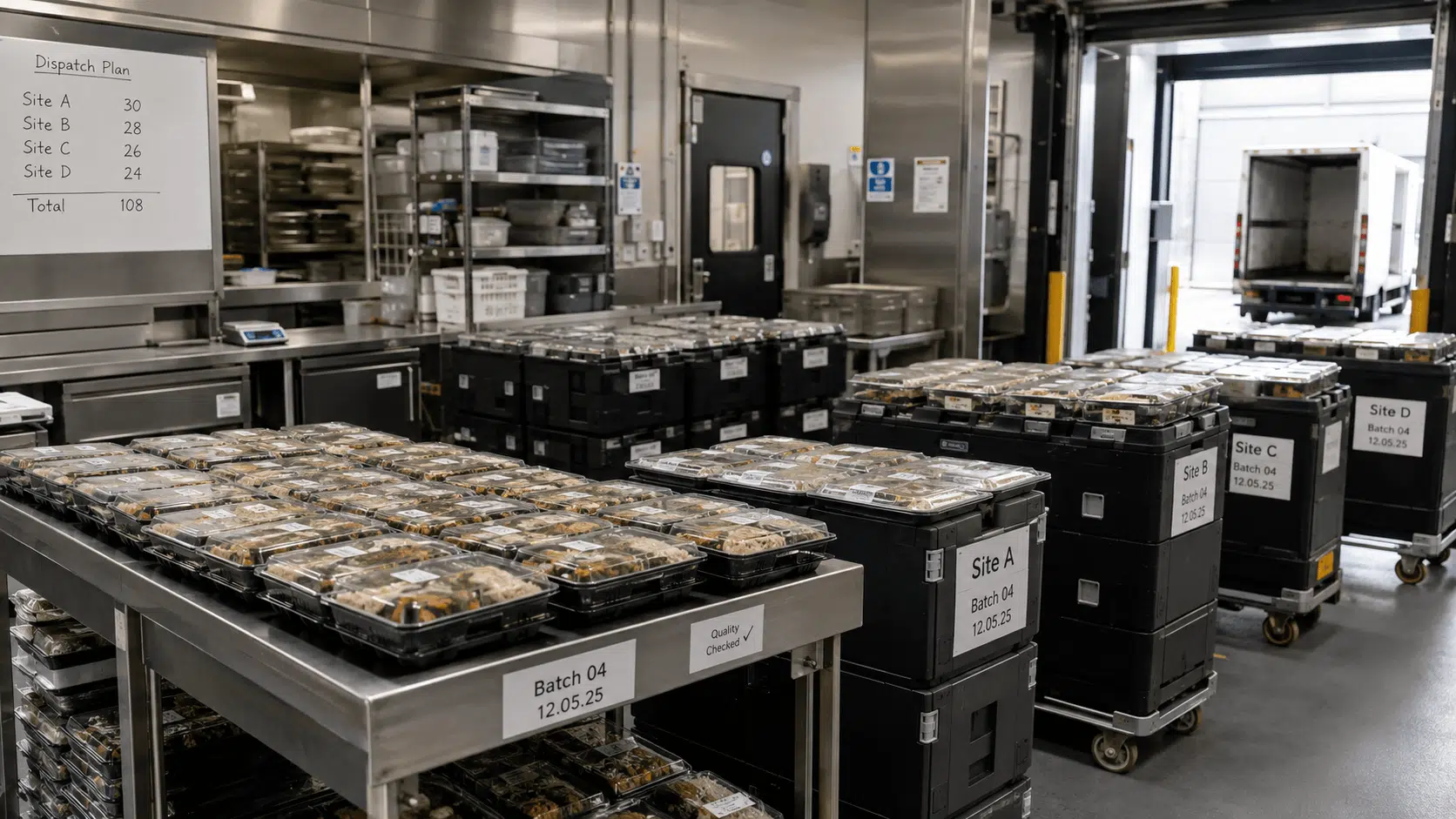
A dedicated production unit with proper cold storage changes the equation entirely. You can batch produce further in advance, hold stock safely, and distribute on a schedule that actually suits your operation rather than one dictated by how much fridge space happens to be free that week. For groups running five-plus sites, this alone can be the difference between smooth, predictable operations and a constant, low-level scramble.
It Makes Growth Actually Manageable
Here’s the thing about opening restaurant number six, seven, or eight without a central production model: you’re not just opening a new site, you’re recreating your entire operational headache all over again. New kitchen, new team, new interpretation of your recipes, new supplier relationships to manage from scratch.
With a central production unit already in place, a new site opening becomes considerably simpler. The recipes are already standardised. The supply chain is already established. The new site essentially plugs into an existing system rather than reinventing one. That’s a genuinely different growth trajectory: steadier, faster, and a lot less stressful for whoever’s managing the rollout.
When Is the Right Time to Make the Switch?
There’s no single magic number, but five sites tends to be the point where the informal, “we’ll figure it out as we go” approach stops working. Below that, a shared prep arrangement between two or three sites might just about hold together. Beyond it, the inconsistency and inefficiency start compounding fast enough that most operators feel it directly: in margins, in complaints, in how much time senior chefs spend firefighting instead of developing the menu.
If you’re already noticing variation in quality between sites, struggling with food costs that don’t quite add up, or finding that your restaurant kitchens are bursting at the seams with prep work and storage rather than service, those are all fairly reliable signs that the timing has arrived.
Getting the Space Right
Setting up a central production unit isn’t something you want to rush, and the space itself matters more than people expect. You need enough capacity for current volumes plus realistic room to grow, cold storage that’s actually fit for the scale you’re operating at, and a layout that supports efficient workflow rather than fighting against it.

This is where working with a commercial kitchen and cold storage provider who understands the specific demands of restaurant group production – rather than a generic industrial unit – makes a genuine difference. The right space, set up properly from day one, saves you from outgrowing it within eighteen months and having to go through the whole process again. Taking a look at our locations across London is a good starting point for working out what’s realistically within reach for your distribution network.
Final Thought
Scaling a restaurant group is hard enough without every new site multiplying the same operational problems. A central production unit isn’t just an efficiency upgrade. It’s what allows consistency, cost control, and growth to actually happen at the same time, instead of pulling against each other.
If you’re running five or more sites and recognise any of the challenges above, it might be time to have a proper look at what a dedicated production and cold storage setup could do for your business. Run a margin leak audit across your sites to learn when to make the move to a CPU.
Dephna offers flexible commercial kitchen and cold storage space across London, built to support exactly this kind of production model. If you’d like to talk through what a central production unit could look like for your group, we’re happy to have that conversation. Talk to one of our team today.
FAQs
What is a central production unit in the restaurant industry?
A central production unit (CPU) is a dedicated facility where a restaurant group’s food prep and production is centralised, rather than each individual site preparing everything independently.
How many sites do I need before a central production unit makes sense?
Most operators start seeing real benefits from around five sites, though it can depend on menu complexity, prep volume, and how much variation you’re already noticing between locations.
Does a central production unit save money?
Yes, typically through bulk purchasing power, reduced labour duplication, and lower food waste from more accurate demand forecasting.
Will a central production unit affect food quality?
It should improve consistency rather than harm quality, since the same team produces core components to the same standard every time, reducing site-to-site variation.
What role does cold storage play in a central production unit?
Proper cold storage allows you to batch produce further in advance and hold stock safely, which is often the main constraint growing groups run into with individual restaurant kitchens.
Can a central production unit help with opening new sites?
Yes – new sites can plug into existing recipes, supply chains, and processes rather than starting from scratch, which makes expansion considerably faster and less risky.
Does every dish need to come from the central production unit?
Not necessarily. Many groups centralise base components like sauces, marinades, and batch-cooked items while leaving finishing and plating to individual site kitchens.
What should I look for in a commercial kitchen space for this purpose?
Enough capacity for current and future volume, suitable cold storage, and a layout designed for efficient production workflow rather than a generic industrial unit.
Is London a good location for a central production unit?
London’s central position can work well for groups with sites across the city and surrounding areas, particularly where distribution logistics and delivery times matter.
How do I know if my restaurant group is ready to switch to this model?
Signs include inconsistent quality across sites, food costs that don’t add up, and restaurant kitchens struggling for space due to prep and storage demands.
Author Information
This article was co-written by…
Nimesh, Managing Director
Our Managing Director, Nimesh, is a seasoned expert in entrepreneurship, business strategy and real estate development, with a strong focus on the food and commercial kitchen rental industry. He’s passionate about empowering businesses and start-ups by creating flexible, high-quality spaces that help them thrive. When he’s not driving the business forward, Nimesh is busy exploring the newest food spots to stay ahead of the game.